


 Latest:

 may 06 2026
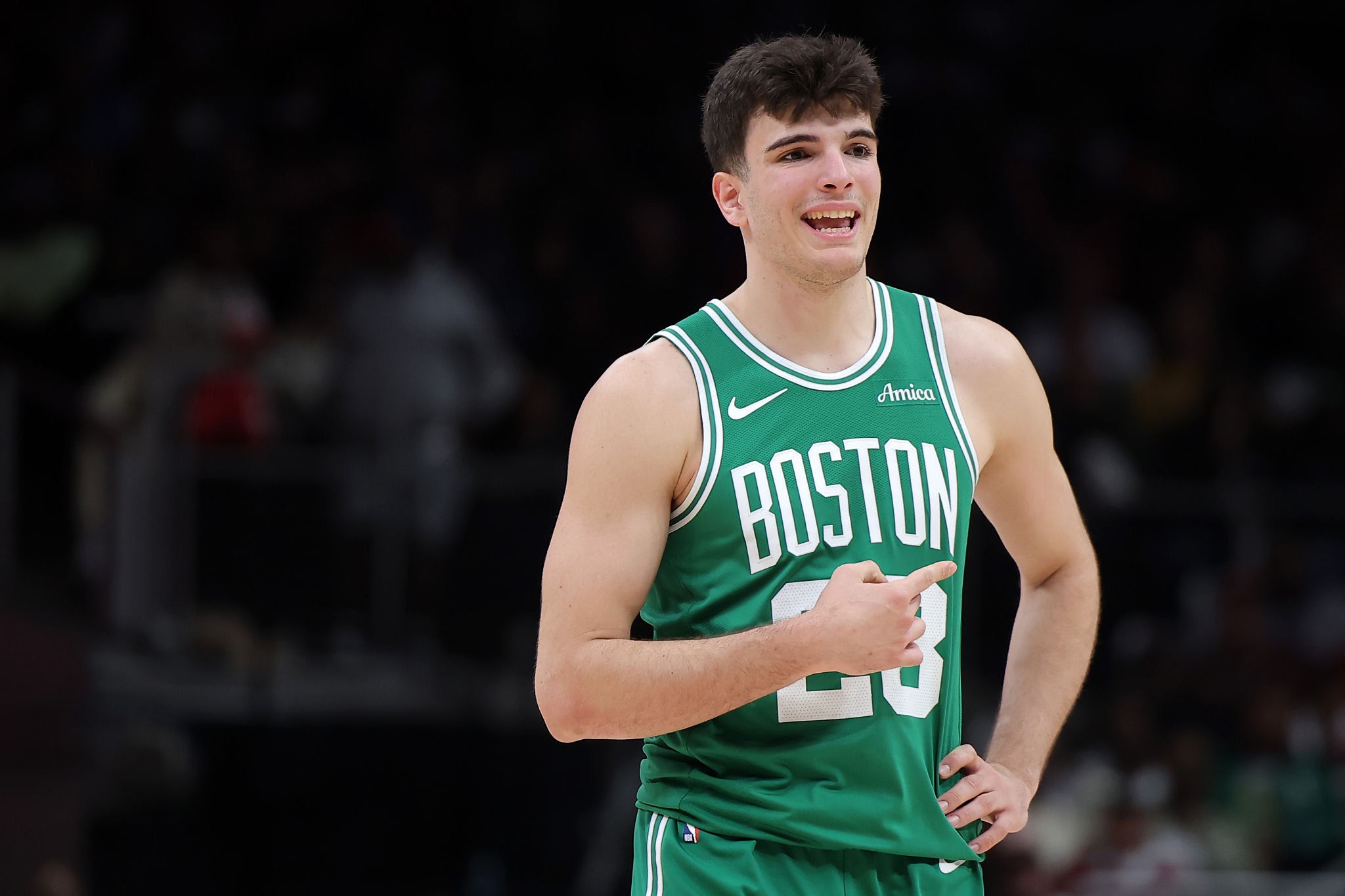
Not all rookies need the ball to make an impact in the NBA. Some survive on offensive talent, others on physicality, and a few carve out a path through something much harder to teach: competitiveness. That's where Hugo González emerged during his first season with the Boston Celtics.
The Spanish wing's season ended with Boston's elimination by the Philadelphia 76ers in the conference semifinals, but it also left the sense that the franchise found a useful piece in the present and an even more interesting one for the future. Because within a roster designed to compete and loaded with veterans, Hugo accomplished something far from simple for a 20-year-old player: earning the trust of Joe Mazzulla.
His season was not particularly brilliant from a statistical standpoint. He closed the year with modest numbers, far from the media spotlight surrounding other rookies of his generation. But reducing his impact to the numbers would be to misunderstand what his real role was within Boston's rotation. Hugo found minutes doing the uncomfortable work. Defending the opposing team's best perimeter player, fighting for rebounds, changing the energy of games, and always playing at the physical limit.
At many points during the season, especially during Jayson Tatum's absence, the Spanish player became one of those guys that coaches value far more than traditional statistics reflect. His defensive intensity allowed Boston to maintain aggressiveness in the second units, and his ability to defend multiple perimeter positions ended up being a useful tool on demanding calendar nights.
The NBA especially punishes young players who hesitate. And Hugo practically never did. Mazzulla threw him into complex scenarios from very early on: minutes against established stars, maximum-demand matchups, and defensive responsibilities that normally don't fall on a newly arrived European rookie. The Spanish player responded with personality, always playing with a competitive aggressiveness that quickly caught the organization's attention.
There were games where that silent influence also turned into offensive production. The most representative probably came against the Milwaukee Bucks, in a performance that served as the perfect showcase of everything he can contribute: defensive activity, rebounding, transition play, and athletic ability to compete against dominant physicality like Giannis Antetokounmpo's.
Additionally, there was one especially revealing detail during much of the season: Boston usually functioned well when Hugo was on the court. His impact on metrics like +/- confirmed something the eye already showed. The team increased pace, activity, and defensive aggressiveness with him on the floor. In a franchise obsessed with competing every possession, those kinds of players always end up finding space.
Tatum's return inevitably reduced his prominence. Boston returned to a much shorter rotation focused entirely on the championship objective, leaving less room for individual development. Still, the simple fact of remaining within the competitive dynamic of a title contender already speaks well of the place he was building during the year.
In the playoffs he barely had real presence and his participation ended up being residual, something logical within the competitive context of the series. But even that final stretch left an important lesson: Boston never stopped seeing him as a piece prepared to enter and compete physically when the game needed it.
The feeling his first season leaves is clear. Hugo González is still far from becoming an important player in the NBA, but he has already demonstrated what his path could be to establish himself there. Defense, energy, and the ability to impact without needing to accumulate shots have allowed him to complete a more solid rookie season than many expected.
And in a league where it's increasingly difficult to find players capable of accepting secondary roles without losing competitive aggressiveness, the Spanish player seems to have understood very quickly what his entry door is.


