


 Latest:

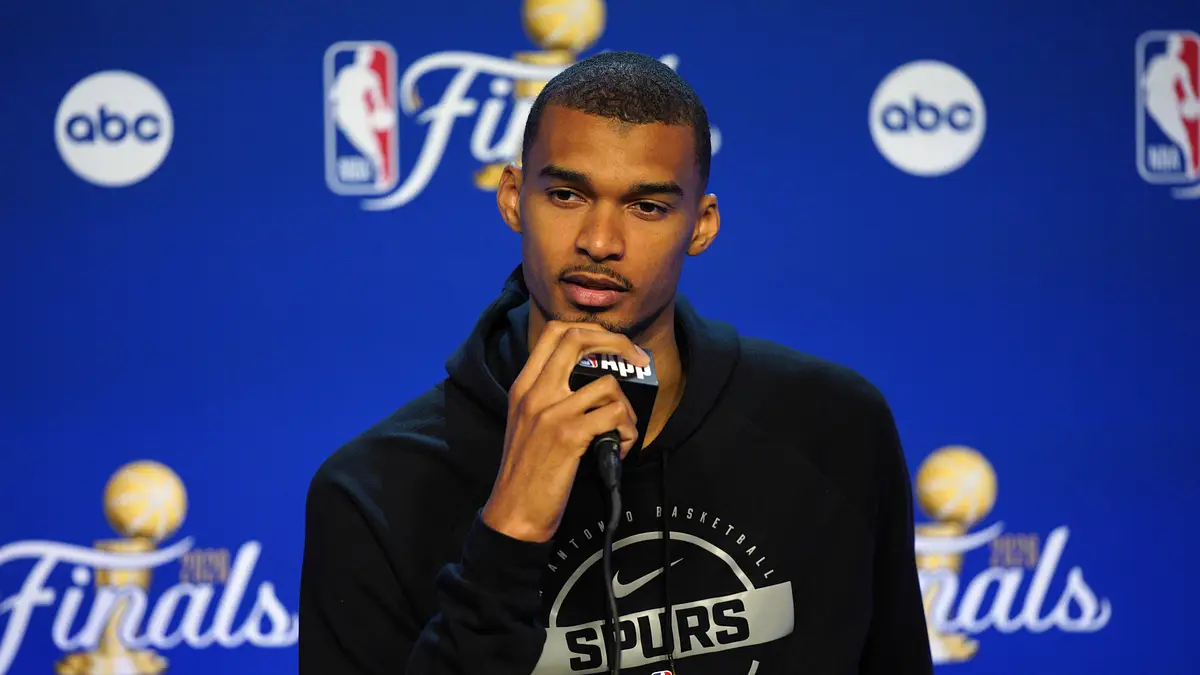
NBA Finals: Wembanyama Demands Mental Response from Spurs: "We're Not Here by Accident"
 jun 04 2026
Victor Wembanyama addressed the San Antonio Spurs at practice following New York Knicks' 1-0 series lead in the NBA Finals with a clear message: Game 1's problem wasn't tactical, but mental. The French star emphasized the group's resilience, insisted the team doesn't need to do anything extraordinary, and summed up the key before Game 2: return to playing "normal," trust the plan, and stop relying solely on talent.
Question. I know you're thinking about the present moment now, about coming back after the 1-0 deficit. If you could take a step back, after the loss in Paris against the United States you said: "I'm worried about the rivals in a couple of years."
Someone asked: "Who are you referring to?"
And you said: "Everyone."
Do you ever think back on those words and use them to measure the journey you've traveled since that night?
VICTOR WEMBANYAMA: No, I don't.
Q. The fact that you've had to face several things in this postseason—the shock, being down against Minnesota, being down against OKC—and that it hasn't been an easy road to get here, does that give you some peace of mind knowing that this team has been able to handle the challenges put in front of it?
VICTOR WEMBANYAMA: Yes, it's very reassuring. We know we're not here by accident. We've been through some weird situations… how do you say it? Strange situations, whatever.
Yes, it's reassuring to know that these guys, the 18 we have, are made this way, they're resilient.
Q. You seem very calm. In the series against OKC you seemed quite tense as the series progressed. Why do you seem more calm now? How are you handling the pressure of the moment?
VICTOR WEMBANYAMA: I don't know. I just speak from the heart and react from the heart, so…
I can't answer that question. One explanation would be that as a series progresses, you get closer to advancing or elimination. The level of tension normally goes up.
Q. I know Pop has spoken to you after some important moments during this run. Did he say anything to you last night or this morning?
VICTOR WEMBANYAMA: I haven't talked to him yet. But yes, he texted me.
Q. Do you mind expanding a bit on what that message said?
VICTOR WEMBANYAMA: In general terms, it said that I've been playing poorly and that I'm better than this.
Q. There was a lot of conversation from the Knicks' side about how they were going to defend you, what players they were going to use. They opted to use Towns a lot. What did you think of the defensive matchup with Towns? Are you planning to make any adjustments?
VICTOR WEMBANYAMA: Actually, I think the reason we lost that game isn't even technical. It's not even technical or tactical. We need to approach the game with a better mental state. We just need to play our game. We just need to be normal.
We don't need to do anything incredible.
Q. You mentioned that you need to be normal. You said it last night and you're repeating it now. The coach was just here talking about how he felt you didn't do the right things as a team, that it was kind of like depending only on your talent. What do you think "normal" means for you?
VICTOR WEMBANYAMA: "Normal" means trusting each other, trusting the basketball gods, trusting the game plan, executing, and not relying so much on talent to make shots or save the day.
We've played a certain way all season. We've had success that way. There's no reason to change on the day the Finals start.
Q. When you defend smaller players, what is required of you differently compared to defending big men? How do you find the balance between staying with the man you're guarding and being available near the rim?
VICTOR WEMBANYAMA: That's an interesting question. I suppose to answer it, we could talk for half an hour with my coaching staff.
For me, defending smaller players is about foot speed. It's true it has some difficulty. I'm still learning, but I've learned a lot about changing my mindset between protecting the rim and defending a guard.
I really need to flip the switch.
Q. You've talked a lot about your routine off the court: sleep, peace, control. I'm wondering how you're juggling that in this environment. There's more media, more chaos, more noise. Is it affecting you right now?
VICTOR WEMBANYAMA: No, it's not affecting me. What's affecting my routine the most right now is that we're training at the arena and not at the training facility. The travel time is a bit longer.


