


 Latest:

EuroLeague Confirms 20-Team Roster for 2026-27 Season: Besiktas and Paris Basketball Receive Wildcards
 jun 27 2026
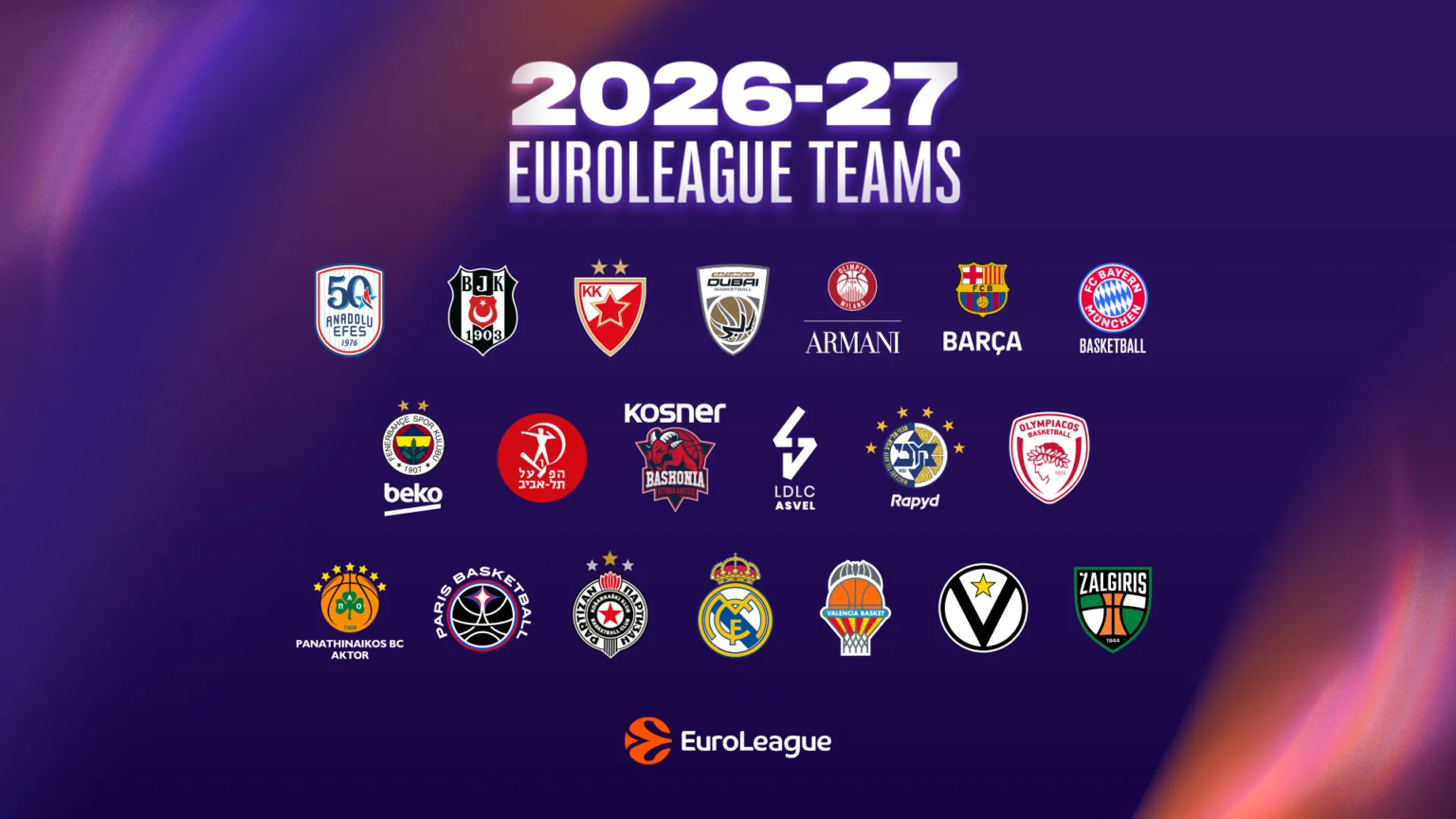
EuroLeague has finalized its participant list for the 2026-27 season. The competition will feature 20 teams, including Valencia Basket, Real Madrid, Baskonia, and Barcelona, with two notable invitations: Paris Basketball and Besiktas Istanbul will compete in the next edition via one-year wildcards.
Euroleague Commercial Assets held a key Board of Directors meeting in Barcelona on Friday, where several sporting and strategic decisions were approved that will need to be ratified by the ECA General Assembly on July 7.
The main highlight concerns the composition of the next EuroLeague, which will maintain the 20-team format. Among them are the tournament's traditional powerhouses, alongside growing projects like Dubai Basketball, Hapoel Tel Aviv, Paris Basketball, and Besiktas Istanbul.
The 20 EuroLeague teams for 2026-27
Anadolu Efes Istanbul
ASVEL LDLC Villeurbanne
Baskonia Vitoria-Gasteiz
Besiktas Istanbul
Crvena Zvezda Meridianbet Belgrade
Dubai Basketball
EA7 Emporio Armani Milan
FC Barcelona
FC Bayern Munich
Fenerbahce Beko Istanbul
Hapoel IBI Tel Aviv
Maccabi Playtika Tel Aviv
Olympiacos Piraeus
Panathinaikos AKTOR Athens
Paris Basketball
Partizan Mozzart Bet Belgrade
Real Madrid
Valencia Basket
Virtus Segafredo Bologna
Zalgiris Kaunas
Besiktas's entry represents one of the most striking moves on the list. The Turkish club, which will compete via invitation, joins a EuroLeague increasingly open to new markets and projects with capacity for sporting, economic, and commercial growth.
Paris Basketball, meanwhile, will continue in the continent's top competition thanks to another one-year wildcard, solidifying EuroLeague's commitment to the French market and to a strategic location like Paris.
EuroLeague maintains its roadmap: 24 teams by 2027-28
In addition to confirming the participant list for the upcoming season, the clubs reaffirmed their intention to expand the competition to 24 teams starting in the 2027-28 season.
The ECA will continue studying different formats to make that expansion viable, though it maintains a clear principle: preserving the idea that all teams can face each other and seeking better integration of the European basketball calendar.
This expansion is part of the transformation EuroLeague wants to drive in the coming years, in a context of strong competition for the future of European basketball and with several markets interested in joining the project.
Real Madrid Renews License for Ten Years
Another of the most important decisions approved by the Board was the extension of Real Madrid's license for ten years. The white club, one of the competition's great historical actors, will remain linked to the EuroLeague project long-term.
The renewal comes at a critical moment, with the competition working on a new franchise-based structure and with several clubs analyzing their future positioning within the European basketball ecosystem.
Franchise Model Advances
Chus Bueno, Executive Director of Euroleague Basketball, informed the meeting of progress in the process to transform current long-term licenses into a franchise model.
The plan is for this system to begin implementation during the 2026-27 season. Additionally, the process for awarding future franchises will officially launch on July 1, 2026.
According to EuroLeague, there is significant interest from clubs already part of its competitions, basketball organizations, and investors linked to new markets.
EuroLeague Super Cup Born
The meeting also brought another major announcement: the creation of a new Super Cup. The first edition is scheduled for September 18-19, 2026.
EuroLeague has not yet detailed the tournament format or participating teams, but the new competition will be integrated into the continental calendar as one of the major highlights of the upcoming season.
With the team roster now defined, Real Madrid's renewal on track, and the horizon of a 24-team EuroLeague in 2027-28, the competition enters a decisive stage for its sporting, economic, and organizational future.


