


 Latest:

 ago 15 2026
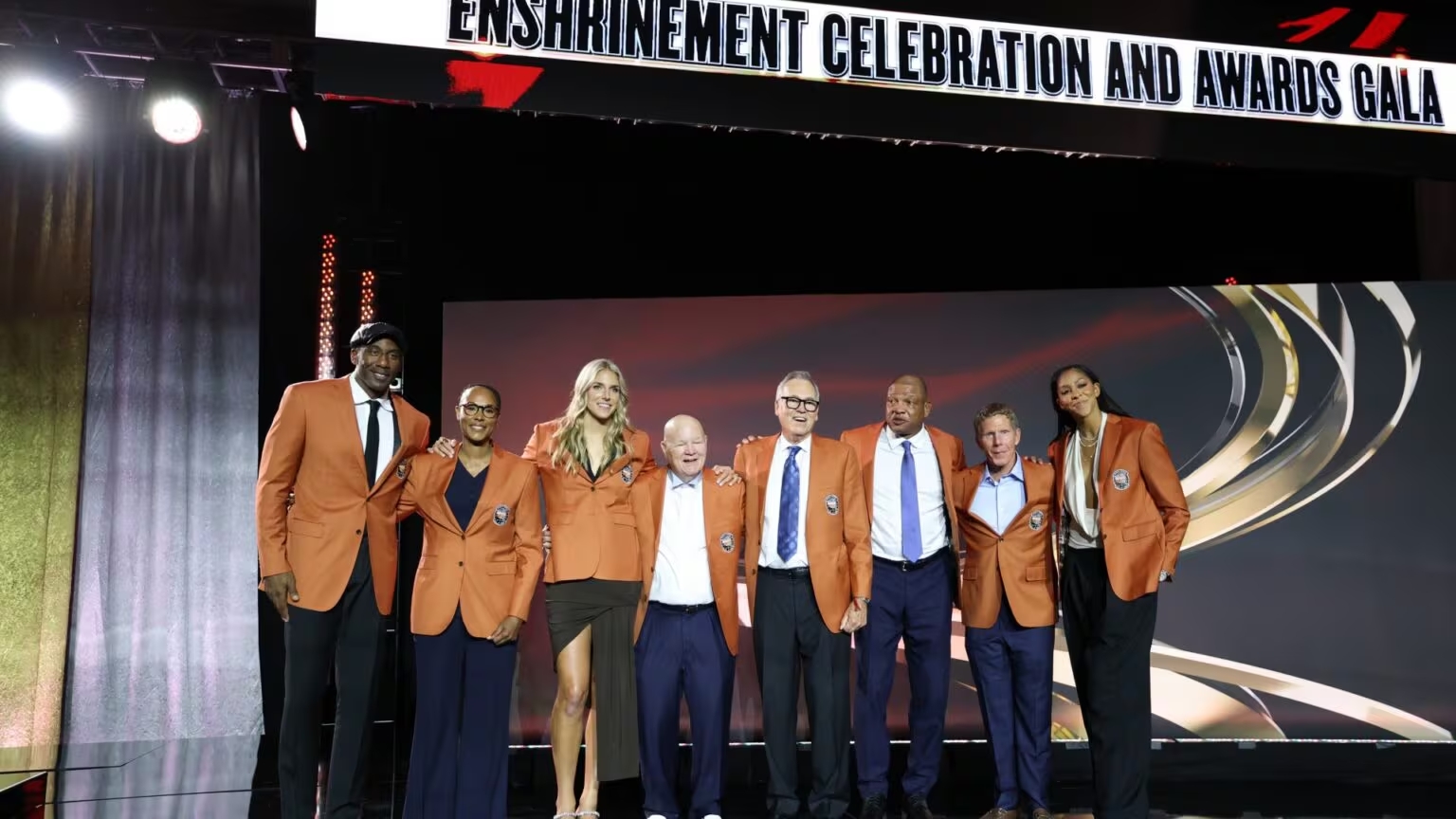
Springfield becomes the center of the basketball world once again. The Naismith Memorial Basketball Hall of Fame celebrates this Saturday at Symphony Hall the induction ceremony for its 2026 class, a group of nine names spanning from the sidelines to officiating and including the team that transformed women's basketball.
Who's Getting In
Amar'e Stoudemire is the only NBA player in this class. Rookie of the Year in 2003 and a six-time All-Star, he closed out fourteen seasons averaging 18.9 points and 7.8 rebounds across Phoenix, New York, Dallas, and Miami, and was one of the key pieces of the Seven Seconds or Less system that revolutionized the game.
Doc Rivers enters as one of the winningest coaches in history: more than 1,180 victories over twenty-seven seasons leading five franchises, sixth all-time in wins and fourth in playoff victories, with the 2008 championship with the Celtics as his crowning achievement.
Mike D'Antoni is inducted in the contributor category, not for his statistics but for his influence. His fast-paced offensive system and spacing concepts in Phoenix rewrote the way the game is played throughout the league today.
Mark Few completes the coaching chapter with twenty-five consecutive NCAA tournament appearances and two national championship games leading Gonzaga.
Joey Crawford enters as a referee after four decades of service.
The women's basketball contingent is arguably the most powerful of this class. Candace Parker arrives as a three-time WNBA champion and the only player in league history to win both Rookie of the Year and MVP in the same season. Joining her are Elena Delle Donne, a two-time MVP, and Chamique Holdsclaw, a six-time All-Star. Parker and Holdsclaw also share a connection: together they brought five NCAA championships to Pat Summitt's Lady Vols.
Rounding out the list is the 1996 U.S. women's national team, which won Olympic gold in Atlanta with a perfect 8-0 record and whose impact was decisive in the birth of the WNBA.
Stoudemire and the Gesture That Got People Talking
At the pre-ceremony gala, there was an image that perfectly captured the atmosphere. Stoudemire showed up to media day wearing commemorative sandals from the Knicks' 2026 championship, and used the opportunity to assert his role in that project.
He recalled that when he signed in 2010 for five years and $100 million, the team was coming off a 29-53 record, had barely made the playoffs in a decade, and no player of his caliber wanted to go to New York. That summer, LeBron James and Chris Bosh chose Miami. He went alone.
D'Antoni, who coached him in both cities, confirmed it: he was the first player of that level to commit, and his intention wasn't to adapt to New York but to conquer it. The Knicks improved by thirteen wins, made three consecutive playoff appearances, and in February 2011 added Carmelo Anthony. Stoudemire then had the best season of his career: 25.3 points, 8.2 rebounds, and ninth in MVP voting.
The Absent Ones, the Other Conversation of the Night
The ceremony also sparked a recurring debate: who should be in but isn't.
Doc Rivers advocated for Marques Johnson, whom he remembers as unstoppable in open court. Joey Crawford defended his colleague Steve Javie, the only referee in his opinion who had the judgment, presence, and knowledge of the rulebook. Chamique Holdsclaw made a case for Cappie Pondexter, a two-time WNBA champion and 2007 Finals MVP, and announced she will nominate her. And D'Antoni pointed to Dick Motta, the fourteenth coach with the most NBA wins and the only one in the top fifteen still left out.


