


 Latest:

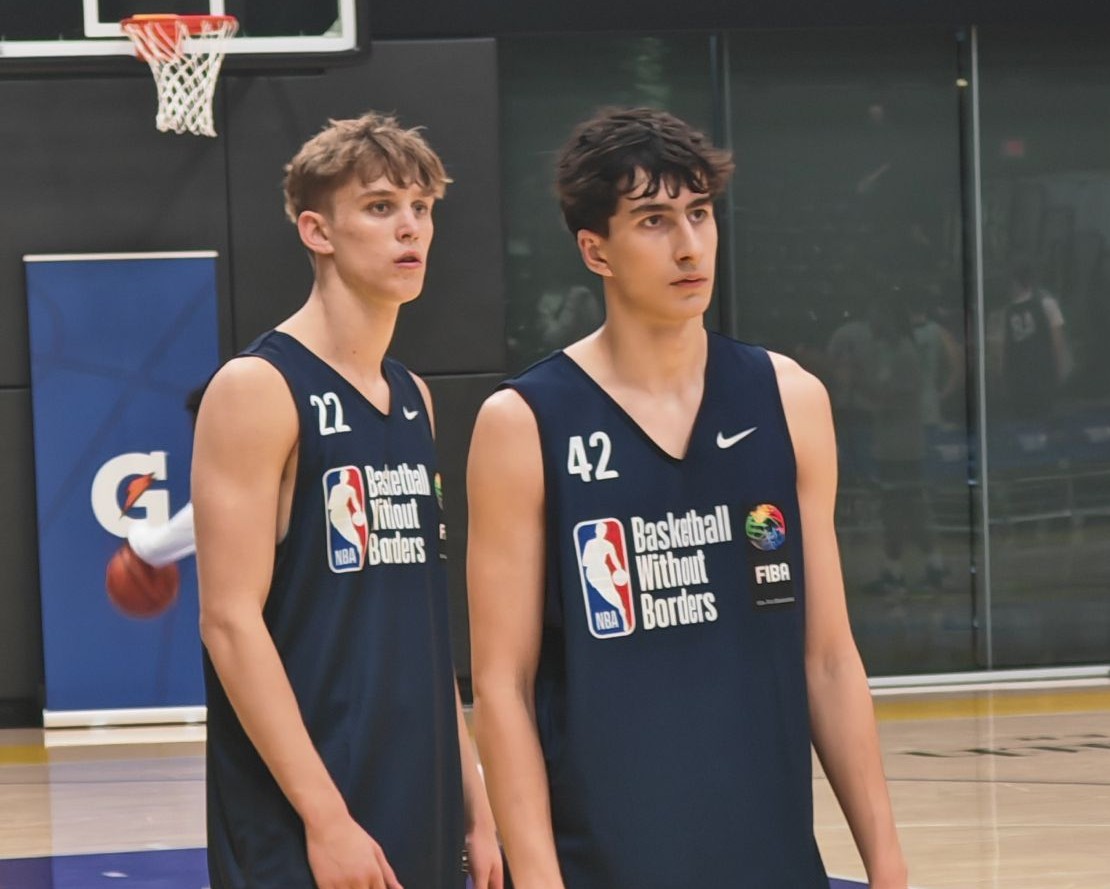
Lucas Sánchez: Spain's Only Representative at Basketball Without Borders Los Angeles
 feb 16 2026
Lucas Sánchez was the only Spanish player at Basketball Without Borders Los Angeles 2026, one of the most prestigious international youth development events organized by the NBA and FIBA. In an interview with Piratas del Basket and Mundo Deportivo right after the event, the BAXI Manresa point guard discussed his experience in the United States, competitive differences with European basketball, his development with the first team, and his future vision marked by adaptation, tactical learning, and high-level demands.
— What did you think of the All-Star atmosphere, the scale, the attractions around the event?
Honestly, it's very impressive. Everything is huge, very well organized, with tons of activities around the All-Star. It's very well put together and a really cool experience.
— And playing here, in a facility like this, with the Kobe Bryant murals, the rooms, the championship locker rooms, the trophies… does it impress you?
Yes, quite a bit. You also see the NBA trophies and that has a big impact. When you're playing you don't really notice it, but the first time I came in here I thought: "this is crazy."
— You're already used to competing in other tournaments. What do you notice most in the difference? The physical dominance or that the European player has a technical foundation that they don't have here yet?
I think the game itself is pretty similar. Physically, yes, some players are superior to others, but I don't think it's a continental thing, it's more about individuals. From my perspective, more than the technical side—where I think I do well—it's the tactical side.
— You're already playing at a professional level in Spain. Does that make a difference in your day-to-day compared to these guys?
Yes, because there are a lot of players here who are in high school and have their plays and systems, but it's not the same. For me, for example, training with the first team, I work with much higher demands: being more focused, having a lot of mental and physical load. I think that shows a bit.
— At Manresa, what are you learning the most right now?
With the first team, above all, staying connected to the play at all times. You can't lose focus for a second, because if you lose your man you don't know where he is anymore. It's about being concentrated at all times, both on offense and defense, understanding when to help and when not to. It's not so much about one-on-one defense, but doing it as a team.
— And with Diego Ocampo, how's that going?
Very well. He pushes us young players hard, demands a lot from us every day so we keep improving and can train with the first team.
— Piratas del Basket is a Galician media outlet and Ocampo is also Galician, so elaborate a bit more. Don't just tell us he's a good coach.
I started training with him two summers ago, right after finishing the U-16 European Championship. He called me to do preseason and on the first day he spoke with me. He gave me a lot of peace of mind, especially at the beginning, telling me not to try to do better than the others, because they were already professionals and there was a huge physical difference. He told me to focus on learning, because later, when I went back to play with my own age group, I'd already have all that down.
— What is the U League giving you?
It's a really cool league. Normally, games against teams like Valencia or Madrid you only play in Spanish championships, once a year. The U League lets you play those kinds of high-level games for weeks, continuously, and not just in a one-off tournament.
— You participated in Basketball Without Borders as a Manresa player. How do you explain what the club is there?
Manresa is a basketball club with a very clear DNA: fight until the end. Every ball has to be yours, every loose ball you have to fight for, throw yourself on the ground and compete always.
— And how do you explain what the city of Manresa is? There, many people only know Barcelona.
I don't live in Manresa, I'm in Sant Cugat, but the people there are very friendly. I remember a EuroCup game at Pavelló Nou Congost: at the end, we went to high-five the fans and everyone was very nice, especially with the young players.
— As a player, what profile do you think you can become?
I can adapt quite a bit to the team. I usually play point guard, but at certain moments I can also play shooting guard because I have good size. I think I can contribute in different roles depending on what the team needs.
— Do you feel more comfortable scoring or assisting?
It depends a lot on the game. If I have the advantage, maybe I have to force it a bit more and score. But if another teammate has the advantage, I try to find him more.
— Watching you these days, it seems like you prioritize passing and team play over forcing shots.
Yes, and here it's also complicated because you're with people you've known for three or four days. It's hard to build chemistry that fast and set up plays. There are more general systems and it's harder to play something elaborate, so I try to prioritize the game.
— Many young players are making the jump to the NCAA. Do you see yourself going to college in the short term?
It's an option, but right now I don't think much about the future. I'm focused on the U League, on Manresa's U-18 team and doing the best I can. The goal is to reach the Final Four to go to the Spanish Championship and win as many games as possible in the U League. Whatever comes, will come.
— You have friends playing in the NCAA. What do they tell you about the experience?
They speak very highly of it. It's different from Spain, not better or worse, just different. They especially highlight the schedules: in preseason they start very early, at six in the morning to run, with a lot of physical work. Here we're more used to training in the afternoons.
— Do you think it's becoming increasingly difficult for young players in Spain to find a spot in the ACB and that's why many are looking toward the United States?
It depends a lot on the level and the person. Going to the NCAA lets you develop, gain physical strength and muscle, and then even come back. Right now at Manresa I'm doing well and comfortable. It depends on each player.


