


 Latest:

 nov 10 2026
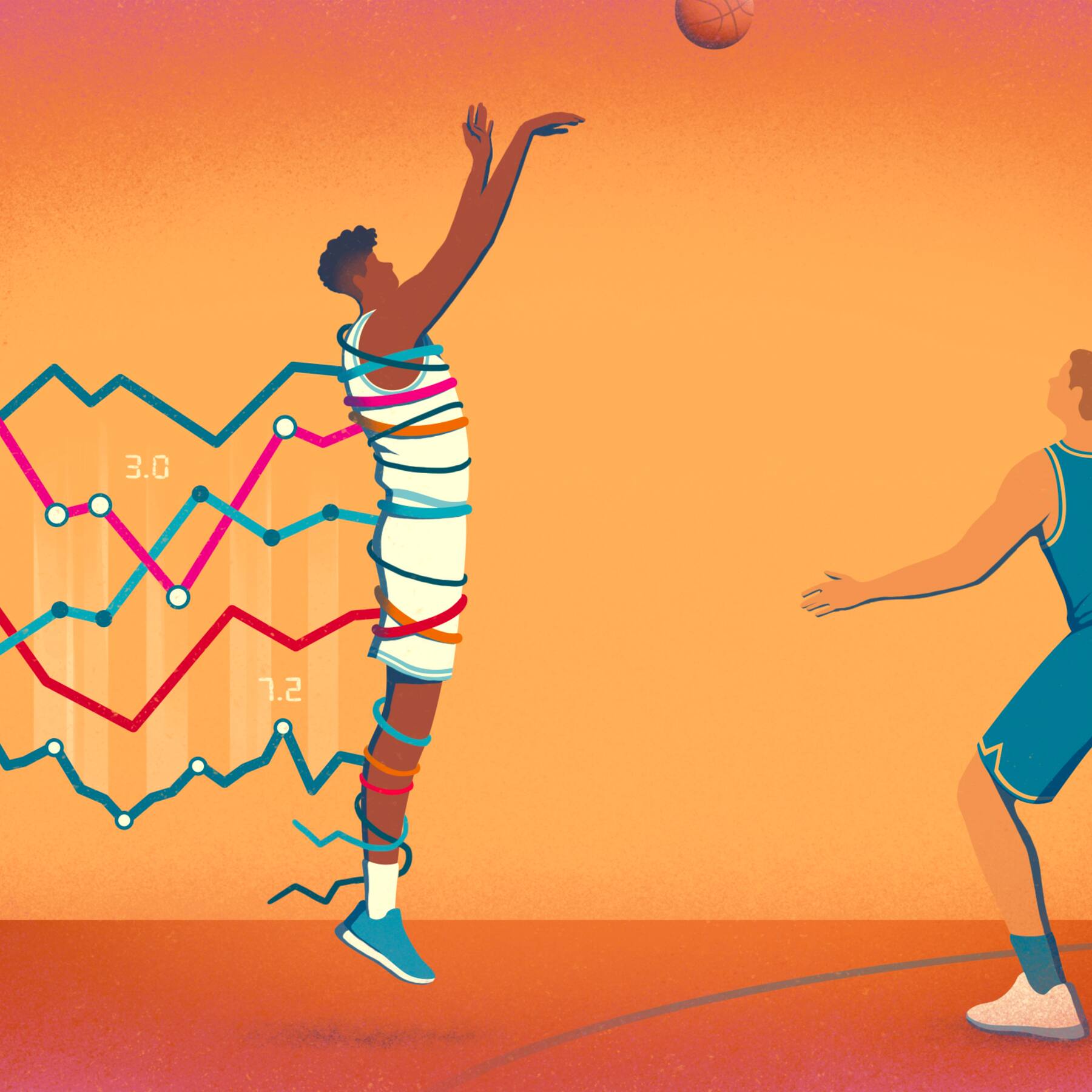
For years, basketball organizations have invested millions in analytics departments, data scientists, tracking cameras, machine learning models, predictive algorithms, shot quality metrics, and enough dashboards to launch a satellite into orbit. We're assured, time and again, that modern basketball is now governed by data, evidence, and innovation.
Curiously, after months of observing the 2026 season unfold, a surprising finding has emerged.
All teams appear to employ man-to-man defense.
Throughout the entire game.
In every matchup.
Without interruption whatsoever.
Apparently, after processing trillions of data points, thousands of player-tracking variables, and computational power sufficient to model weather systems, the collective conclusion has been: Guard your man.
One can only imagine the momentous meetings that led to this revolutionary revelation.
Analytics Director: "We've analyzed 14 million possessions."
Head Coach: "And?"
Analytics Director: "We've narrowed defensive options down to one."
Head Coach: "Excellent work."
Meanwhile, coaching staffs continue to grow at a rate previously associated only with government agencies. What was once a head coach and two assistants has evolved into an entire parliamentary system sitting on the bench.
There are offensive coordinators, defensive coordinators, player development coaches, player development coaching assistants, assistants to the player development coaching assistants, video coordinators, data coordinators, analytics coordinators, game management specialists, strategic advisors, and at least three people whose job titles no one can clearly explain.
A timeout now resembles a corporate board meeting.
Seventeen coaches huddle around a whiteboard, while players patiently await the "revolutionary" tactical adjustment:
"Keep guarding your man."
The analytics department, naturally, confirms the wisdom of this approach via a 47-slide presentation featuring scatter plots, efficiency curves, possession maps, and such a color-coded display that it could reasonably be considered modern art.
The final recommendation: "Keep guarding your man, but with improved connectivity." No one quite knows what "improved connectivity" means, but it sounds analytical, which is what matters.
The Great Defensive Mystery of 2026
Which raises an even more troubling question:
What happened to all the other defenses?
There was a time when basketball coaches had an entire arsenal of tactical options. There were 2-3 zone defenses, 1-3-1 zones, combination zones, matchup zones, "amoeba" defenses, mixed defenses like the box-and-one or triangle-and-two, unconventional defenses, half-court traps, and countless defensive schemes that seemed to have been devised by sleep-deprived coaches armed with nothing but coffee and a whiteboard.
And today?
Apparently, they've all entered the Witness Protection Program.
Somewhere, an old, dusty box-and-one defense rests in an attic, wondering when everything went wrong.
The triangle-and-two hasn't been seen in public for years. Combination zone defense survives only in ancient coaching seminar videos, narrated by retired high school basketball legends.
One can assume there was a meeting.
Analytics Director: "Boss, we've analyzed the data.
Head Coach: "Excellent. What does it say about zone defense?"
Analytics Director: "Eliminate it."
Head Coach: "And the box-and-one?"
Analytics Director: "Eliminate it."
Head Coach: "Triangle-and-two?"
Analytics Director: "Please stop asking."
Head Coach: "What about combination defenses?"
Analytics Director: "We're trying to be a serious organization."
So, despite having seventeen assistant coaches, five video coordinators, three analytics specialists, two sports scientists, and an intern capable of producing a twelve-page report on weak-side help defense efficiency, the defensive game plan remains astonishingly simple:
Guard your player.
For forty minutes.
Without interruption.
Regardless of the score.
Regardless of the opponent.
Regardless of whether the opposing point guard has 38 points and is shooting like he's divinely guided.
The possibility of deploying a zone defense as a surprise seems to have become more radical than attempting a four-point shot. One begins to wonder what exactly those seventeen assistants discuss during games.
Certainly not defensive variety. Perhaps one oversees hydration.
Another manages towel distribution.
A third handles the logistics of play folders.
Because if all seventeen are helping design the same man-to-man defense, the coaching staff's efficiency rating is alarmingly low.
The saddest part is that opposing players no longer get the pleasure of huddling up and hearing:
"Guys... they're in a combination defense—box-and-one."
That phrase used to trigger immediate confusion, panic, and occasionally even existential reflection.
Now, the scouting report on the opponent is refreshingly simple:
"What defense do they run?"
"Man-to-man."
"Anything else?"
"No."
"You sure?"
"Completely."
"What about after timeouts?"
"Man-to-man."
"When we're up twenty?"
"Man-to-man."
"When we're down twenty?"
"Believe it or not... still man-to-man."
So, after decades of basketball evolution, advances in analytics, unprecedented access to data, and coaching staffs so numerous they could form their own team, the sport has finally arrived at its ultimate tactical destination:
A thousand-page analytical report whose practical conclusion is:
"Guard your player and, whatever you do, don't accidentally run a combination defense. People might think you're having fun!"
Analysts produce reports so voluminous they could prop open a door.
And after all that display of intellectual firepower, players take the court and spend the next forty minutes doing exactly what basketball teams did decades ago:
To be fair, data analytics has undeniably transformed basketball. It's improved player evaluation, roster construction, injury prevention, and shooting strategy. However, from the perspective of a fan watching games every night, it's curious to contrast the sport's technological sophistication with the reality on the court.
Supercomputers process endless streams of data.
Dozens of coaches dissect every possession.
Guard the man, while seventeen assistant coaches watch with great enthusiasm.
I rest my case.


