


 Latest:

 ago 12 2026
Thinking that another World Championship could arrive for one of our senior national teams may sound strange to those unfamiliar with women's basketball, and paradoxically, it's also unusual for those closely following the team coached by Miguel Méndez. Yet history consistently positions the German capital as the 'ideal destination' to 'dream again' when it comes to basketball.
From September 3-14, the FIBA Women's Basketball World Cup will take place in Berlin, Germany with the Max-Schmeling Arena serving as support during the 4 days of the group stage, alongside the impressive Berlin Arena as the venues for the intercontinental tournament in the national team's return to this competition after failing to qualify for the edition four years ago in Sydney, Australia—a result that triggered a turning point in the senior team's trajectory, ultimately culminating in a complete overhaul following two silver medals in the last two editions of the EuroBasket Women, losing to Belgium in both 2023 and last summer in 2025 after leading at halftime in both instances (being the only team in that predicament).
But, knowing the situation and with the added challenge of a team like the United States (based on what was seen in the San Juan Pre-Olympic tournament), what does Berlin have that makes it so special for Spanish sports and basketball in particular?
Turning momentarily to the men's teams, both in football and basketball, the 4th continental crown became reality in a place where other walls fell decades before, also unexpectedly, much like Spanish sporting successes.
If we focus on the basketball triumph that was crowned in 2022, the Spanish national team arrived under the radar (beyond a notable naturalization) and with solid preparation. The team? A young group full of talent led by the veteran experience of a person from Mallorca who had won everything up to that point (although he had already lifted a World Championship 3 years earlier, not everything could align so perfectly, I'm afraid).
Even with all that, the return to the intercontinental competition 8 years later gives reason to remember that, within the 'Old Continent', Spain does well winning titles in Berlin, captained by Mallorcans and with expectations closer to 'imagining and dreaming' about attempting it than actually pursuing it (unless that authentic moment arrives, then it usually tends to 'awaken' to try to 'seal the dream).
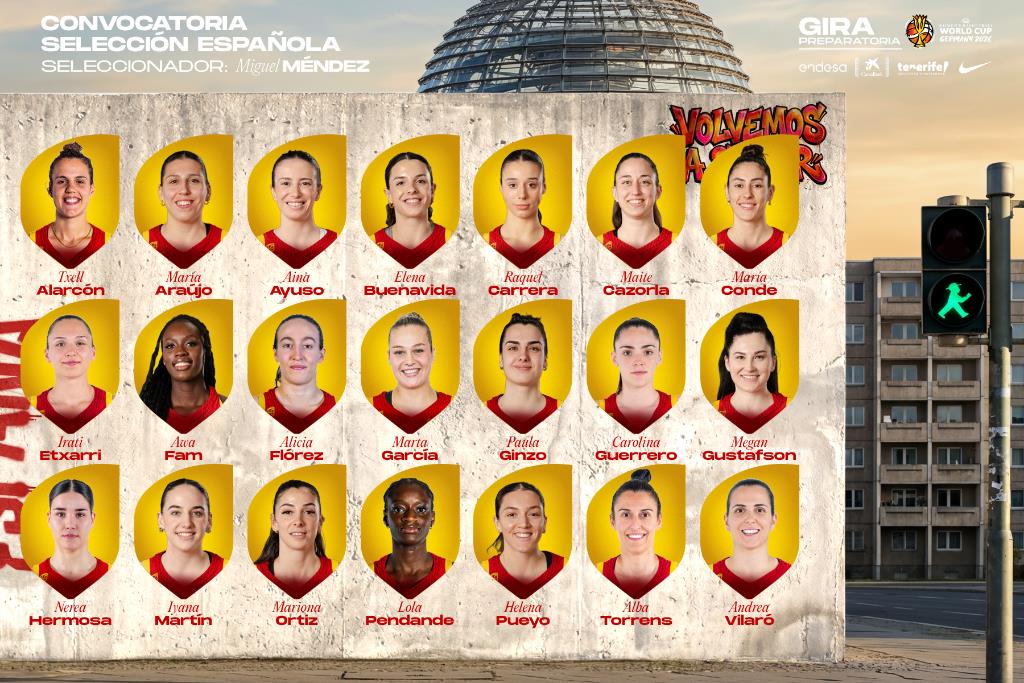
In the weeks leading up to a major tournament there is usually 'little' court time, much 'roster talk' and speculation about who will go or won't go, yet the precedents invite us to think that, once more, with the Spanish jersey on the line in northern Germany, dreams could become reality.


