


 Latest:

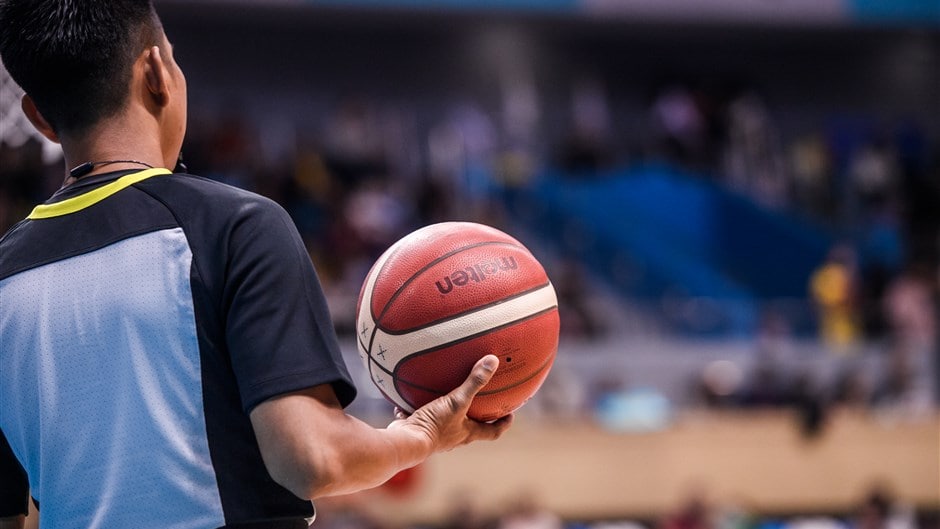
FIBA's New Rules Take Effect October 1: Shooting Action Redefined, Unsportsmanlike Foul Eliminated
 sep 07 2026
European basketball gets a new rulebook. FIBA has approved two significant modifications effective October 1, 2026, right as the season gets underway, affecting two of the most frequent situations in any game: when a player is considered to be in the act of shooting and how an unsportsmanlike foul is penalized.
What Changes in Shooting Action
The general definition remains: there is shooting action when the ball is in the player's hands and is thrown toward the opponent's basket. But three clarifications are added.
The first aims to solve a real problem. In recent years, forced shots from ten, fifteen, or twenty meters away have multiplied with the sole objective of drawing a foul in the act of shooting, especially in transition. From now on, shooting action will only be considered if the offensive player is in the opponent's half of the court, with the exception of end-of-possession or end-of-quarter situations.
The second is the most controversial. The rule establishes that in jump shots or shots in motion, shooting action begins when the player starts to move the shoulders and ball upward in the direction of the basket. This is a new criterion that has never been part of the rulebook before.
And the third directly affects post play: if the player is not facing the basket when the ball initiates that upward movement, it is not considered that they were in the act of shooting. FIBA itself includes in its official interpretations an explicit example: a center who receives the ball with their back to the basket, begins to raise the ball without having turned yet, and receives a foul before facing the basket, will not be in the act of shooting. In other words, the hook shot and the turnaround jump shot are excluded if the foul occurs before the movement is completed.
Goodbye to the Unsportsmanlike Foul
The second change is one of terminology and consequences. The unsportsmanlike foul disappears as a single category and is divided into two:
- Flagrant foul, for hard and excessive actions, more severe or violent, which do count toward disqualification.
- Disruptive foul, for tactical interruption of a play and for fouls committed from behind or laterally in a fast break situation—what the NBA calls clear path—which do not count toward disqualification.
The stated reason is that the previous rule was too strict: a player could be eliminated for two actions of very different nature. Separating them allows punishment of violence without equally penalizing tactical fouls.
Criticism That Has Already Emerged
The change has not been well received by the officiating community. The new wording is unnecessarily convoluted and adopts terminology foreign to basketball, and referees are already reporting confusion and lack of clarity.
The main objection points to the shoulder criterion. Anatomically, the shoulder does not lift the ball: it moves the arm, which in turn moves the forearm, hand, and ball. In a typical jump shot, the arms rise while the shoulders remain at practically the same height, so the referee does not have a precise physical event to identify. Furthermore, officials are trained to focus on the relationship between the defender and the shooter's hand, arm, and ball, not the shoulder.
Not to mention a fundamental argument: basketball already has a universal vocabulary understood by everyone—shooting mechanics, catch, loading, release, continuous motion—and maintains that inventing terms like "disruptive foul," which is not part of the sport's lexicon, also generates translation problems in many languages when a recognized word like unsportsmanlike existed.
Their conclusion is that, since basketball is a global game and FIBA and the NBA are increasingly close organizationally, unnecessary differences between rulesets only generate confusion. Different, they say, does not automatically mean better.


