


 Latest:

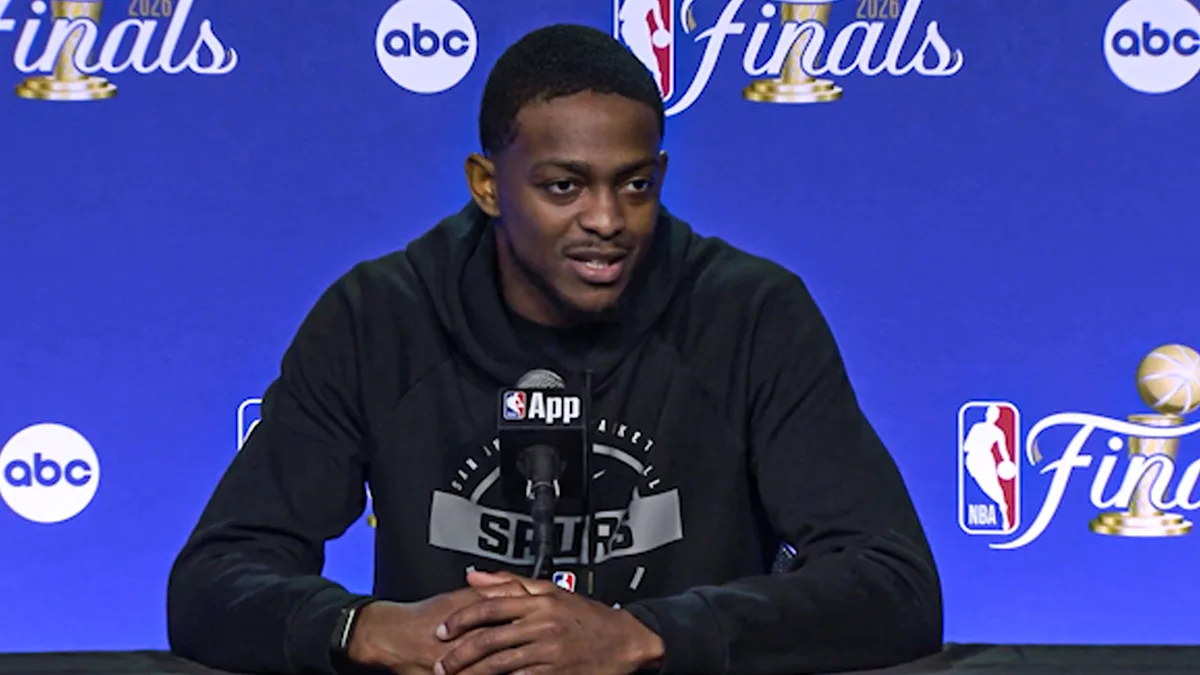
NBA Finals: De'Aaron Fox Warns Before Spurs-Knicks: "We Don't Need to Change Anything"
 jun 03 2026
De'Aaron Fox arrives at his first NBA Finals with a clear message for a young but ambitious San Antonio Spurs team: respect the path that has brought them here, lean on the franchise's winning culture, and don't alter an identity that has put them four wins away from a championship.
Q. De'Aaron, looking back—I think Dylan called you "Unc"—but speaking about your relationship with this team, from where you were when you arrived in San Antonio, what were some of the most difficult moments from your time in Sacramento and how decisive was that for your career?
DE'AARON FOX: I mean, I think losing is definitely the hard part.
But I think the hardest part was having a good year and then hoping, somehow, that things would get better, and then they didn't. I think that's probably the most important part. Normally, when you hear from players who have made the Finals or won the Finals, or whatever, they talk about how much they enjoyed reaching that point. But it's something hard to achieve once, and it's certainly very hard to achieve multiple times.
Once you taste a bit of that success, I think the hardest part was not being able to get back there.
Q. Dylan calls you "Unc." I know you've said before that you're not an "unc." When is he going to get punished for that?
DE'AARON FOX: Punishment? Well, I'm literally an uncle, but I'm not an "unc" in the sense that I'm old. I definitely am not.
Q. I know you're going through this for the first time, but as one of the calm voices on this team, do you say something to the guys? Do you do anything different? Obviously you've made this journey together, but now that you're here, I was wondering if that dynamic changes a bit on your part.
DE'AARON FOX: I think my big message to the guys is, especially as we were going through this process, not right now, but when we were playing the first round and kept advancing: first, obviously, enjoy the moment. This is something hard to do. It's hard to get back to these places.
But don't change anything about what we're doing. There's a reason we're in the Finals. There's a reason we won 60 games. There's a reason we didn't lose three straight games all year.
So we don't want to get to this point and then start changing the way we play. For example, going into Game 7, a lot of times superstars think, or people say, "empty the clip," "let it all out," or whatever phrase you want to use. Going into that game, I was thinking: no, do the things we've been doing all year, which are the reasons we're playing against the defending champs, the reasons we forced a Game 7 on their home court. We don't need to change anything. We're a good team, and we know it.
Going into these games knowing there's a reason we're here and continuing to play the way we play, insisting on it, insisting even more, and continuing to do those things.
Q. About Gregg Popovich, we talked about how he texted Dylan after Game 5. What have you learned from him throughout this playoff run and how important is it to have that resource for a young team that's experiencing and discovering the NBA Finals?
DE'AARON FOX: It's tremendous. And not just Pop, but the organization in general. There's a lot of people walking around this building who have already been there and done it. We can just have a practice and Manu is there or Tim is there. We have these guys who have won multiple championships and reached the top multiple times. You can ask them anything.
Obviously, Pop is going to come in. He's going to say what he thinks, whatever it is. Like I said before, that was the first time after a game that he came in and said something. But he comes to shooting drills, to practices, you see him here and there. But just having that source of information, or someone who's always willing… even if you ask a question, he answers it, or sometimes he just comes in and tells you what he sees.
It's not always something bad, obviously. But they're able to give you those little details that… it doesn't even have to be something huge. It could be something as small as boxing out someone on a free throw or an extra pass that happened at a specific moment in the game that could have changed the game.
It's just fantastic to have that kind of people in your ear, people who don't say it because it makes them successful. They want to see others succeed. That's something really big, especially over a long year and a long run to the Finals.
Q. The Knicks arrive in really hot offensive form. They've won these different series playing different ways on offense. As you've analyzed them, what kind of challenges are they presenting right now on the offensive side?
DE'AARON FOX: Obviously, throughout the year they've been one of the best shooting teams. They've played faster during the playoffs. So for us, it's about getting back, limiting our turnovers. OKC was, I think, the best team in the league at forcing turnovers, and in our last five games we were able to minimize those turnovers and not let them get out and run.
But when you play against a team that has that kind of powerful offense, you can't help them by having a bad offense. I think that's where it all starts: being able to, if we miss a shot, get back in transition and limit our live-ball turnovers. That makes it easier for them and helps them get into an offensive rhythm even faster.
Q. You've talked about all those connections to the past that exist in this building. You also know pretty well how young that locker room is and how little they remember some things that you maybe do remember. How do you think the whole group of young guys, you included, has connected with the past while also creating something new? Because this isn't the Spurs team that won five championships; it's something different. How would you describe that contrast?
DE'AARON FOX: I think these guys have an enormous level of respect for everyone who has come through here. Every time you see them, even if you're not talking about basketball, you just feel it when you go to greet them. They come around and it's like… I guess it's pretty normal now. When you've experienced that, and obviously Vic and Steph have been here a couple of years, you just feel it. Like when I went to Kentucky: you feel the winning history of a program as soon as you step in the building and people start showing up.
I think they've handled it… I don't want to say gracefully, but they've embraced it and want to be part of it. You handle it with a level of respect and a level of responsibility, knowing that when you put on this jersey you have an expectation.
It's not always about winning. You're not always going to win. But you do go through that process of trying to reach that point. I think it's been tremendous. I think that's why we've been able to do it with… we have four guys under 23, and I think we have like seven players under 26, and we're in position to win a championship. That's because of the way they've handled this process.
Q. Your time with Coach Brown, what would you highlight about him as a person and maybe as a coach?
DE'AARON FOX: I think the most important thing is how open he is. That comes from an organizational standpoint. When he arrived, the first thing he said was something like: I want the entire organization in, from ownership to management, coaching staff, players, medical staff, everyone, top to bottom. When you have that… when you have that, and I've seen it since I've been here, I thought: well, he probably got that from somewhere. That's why he wants to do it that way.
So that way, there are no secrets. If a player says something, you tell your medical staff, and then they tell the coach and management, and everybody knows exactly what's happening day to day. I think that's what makes a team good. Obviously there's talent and all those other things that are part of it, a little bit of luck, a little bit of health, all those things. But when you have it from a foundational standpoint, you give yourself a chance to be good year after year.


