


 Latest:

 feb 01 2026
There is a moment before every game at Crypto.com Arena that doesn't appear in the box scores or TV recaps. It happens outside, at Star Plaza, when fans stop, take photos, touch the bronze, or simply stand in silence in front of the statues. There, they don't talk about systems or starting lineups: they talk about memory.
This outdoor space functions as an open-air museum where the history of the Los Angeles Lakers is forever preserved. It is no coincidence that so many different generations gather there before entering the arena. Each statue represents an era, a style of play, a way of understanding the franchise.
Kobe Bryant, the emotional center of the venue
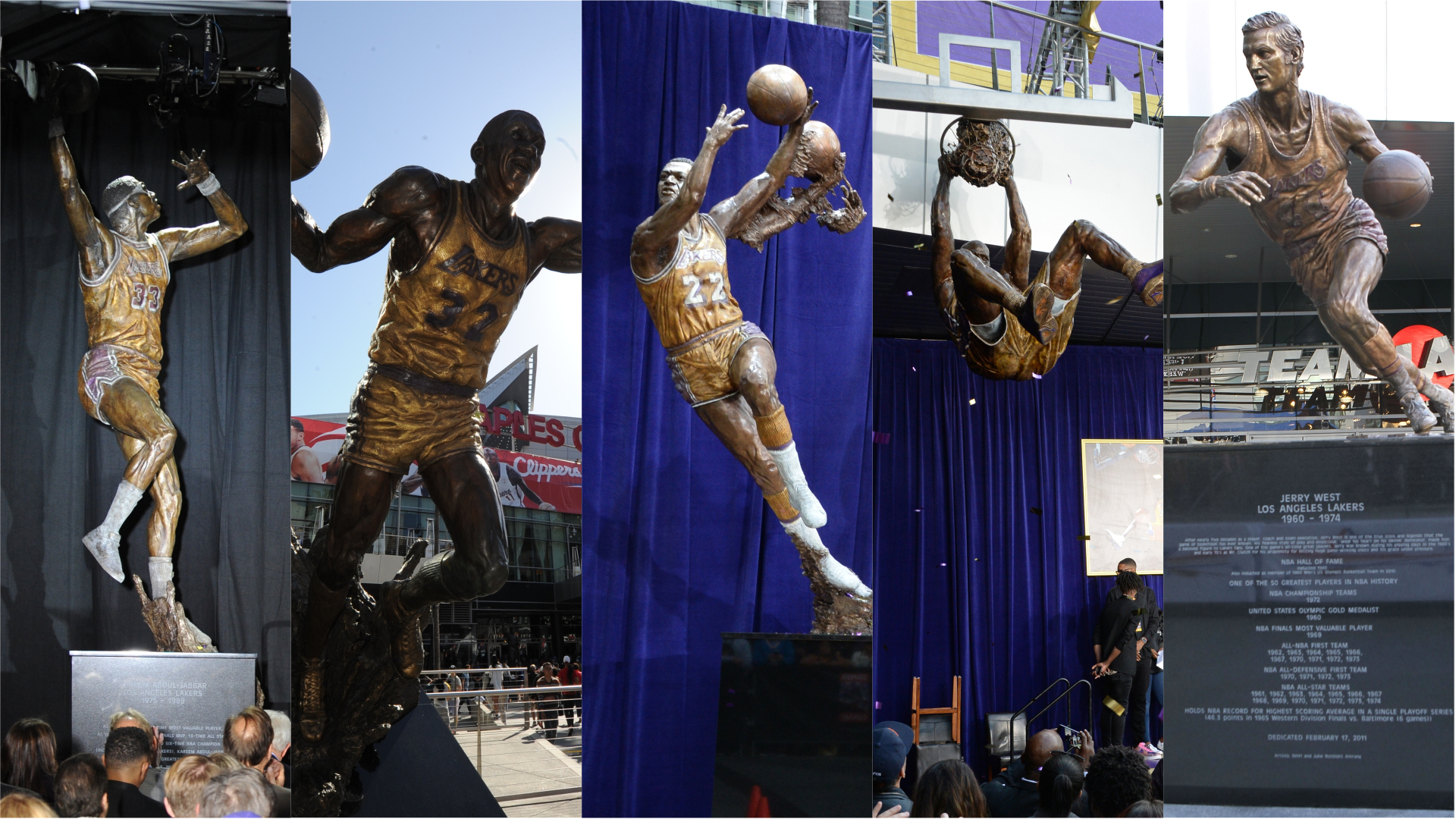
The most recent statue, and the one that serves as the symbolic centerpiece, is that of Kobe Bryant, unveiled on February 9, 2024. It does not represent a specific play, but rather an attitude: his finger raised, his gaze steady, the feeling of constant defiance. Engraved on its base is a direct reference to the 81-point game, a reminder that the impossible can also be documented.
Kobe isn't there just because of his five rings, his MVP awards, or his longevity with a single team. He's there because he defined an entire era of the Lakers, from the late 1990s to well into the 2010s. His induction into the Hall of Fame in 2023 closed the circle that his death in 2020 had abruptly left open.
Showtime, muscle, and inside dominance
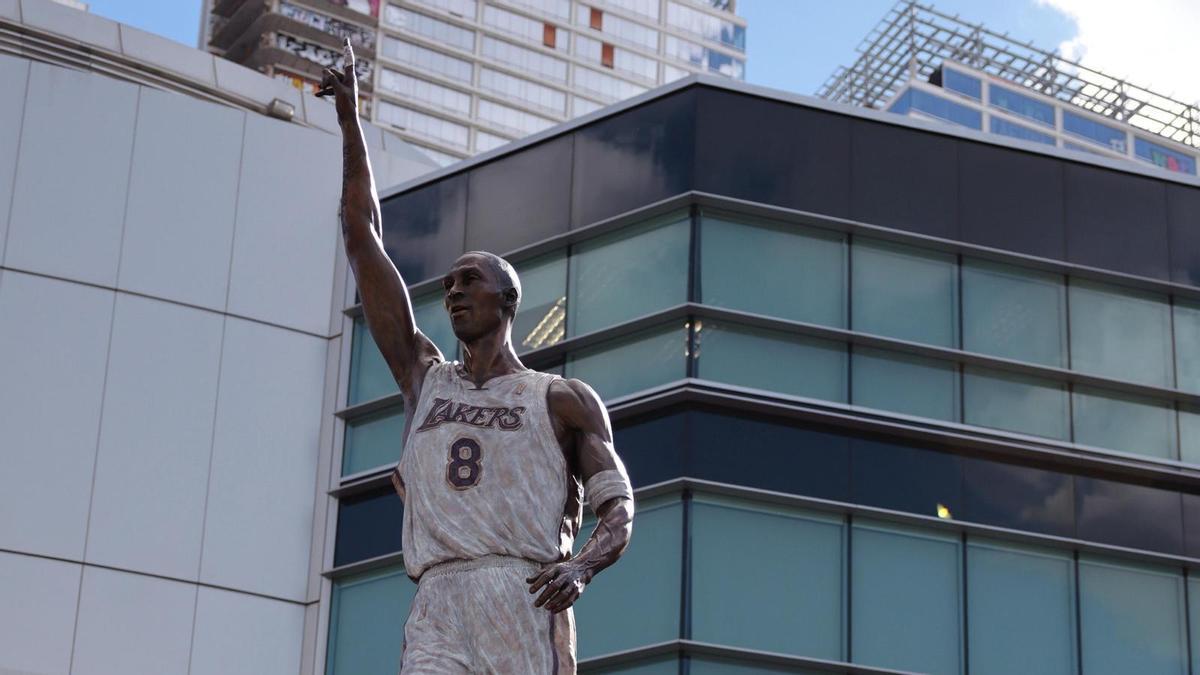
A few meters further on, time goes backwards. Magic Johnson was the first to turn the outside of the arena into a place of worship when his statue was installed in 2004. Magic symbolizes the birth of Showtime, basketball understood as a collective spectacle and permanent smile, a stage that forever changed the global perception of the NBA.
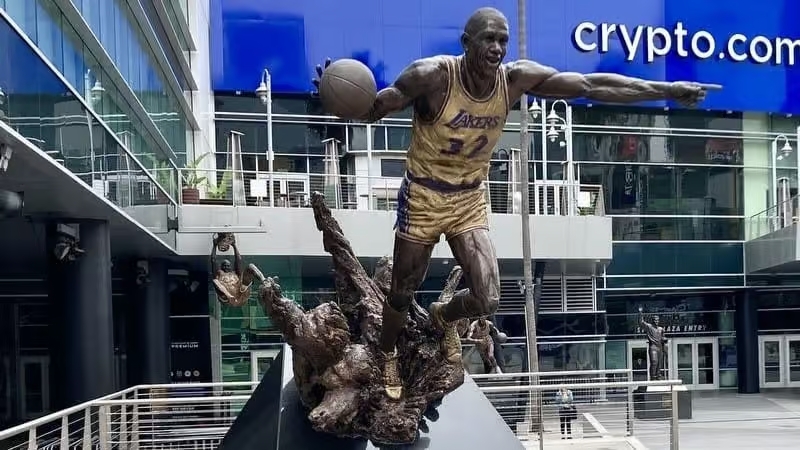
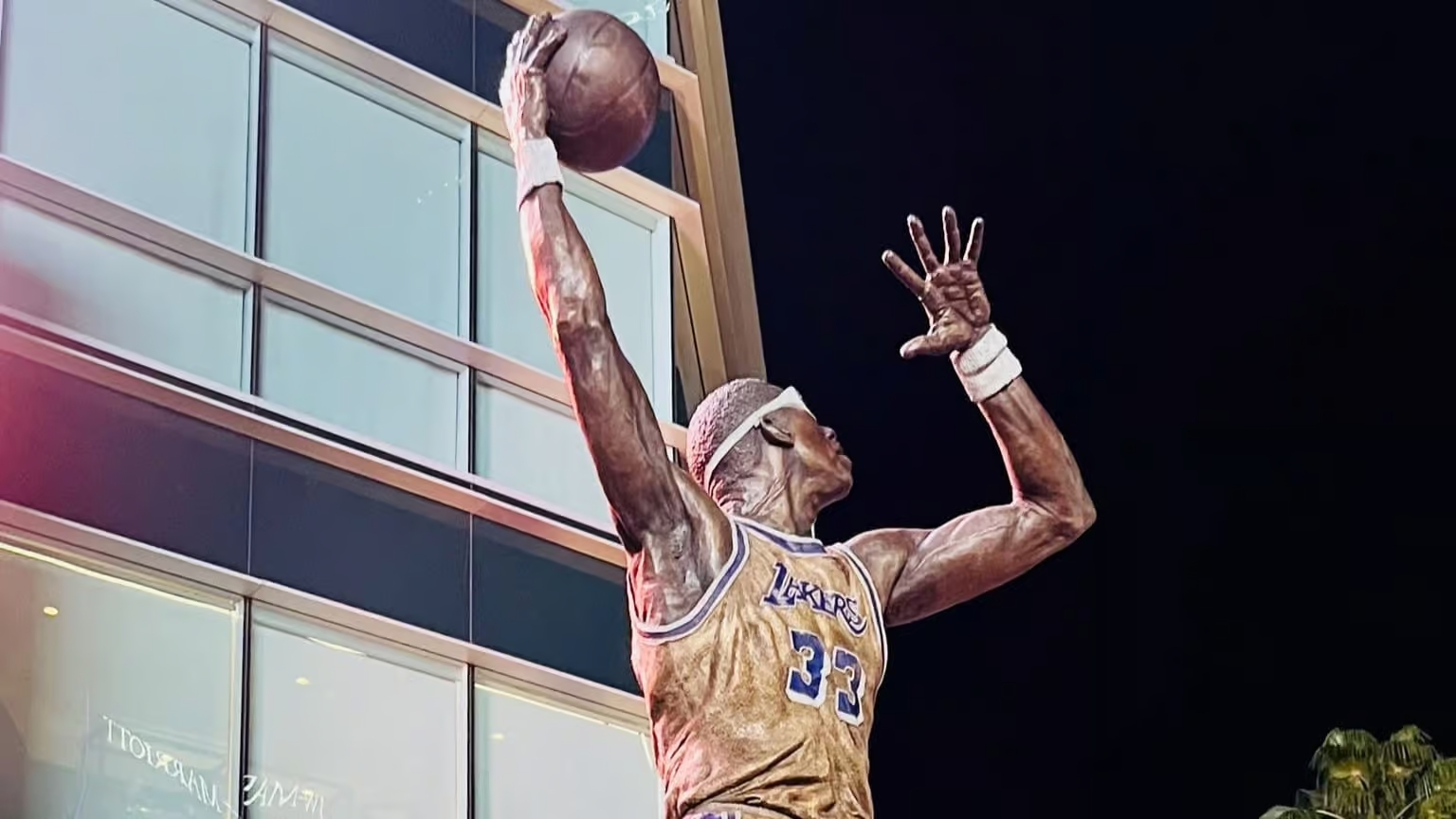
The transition to physical power came with Shaquille O'Neal, immortalized hanging from the rim in one of the most recognizable sculptures in the area. There is no subtlety in that image because there was none in his game: dominance, intimidation, and a constant sense of inevitability during the years of the Los Angeles triple crown.
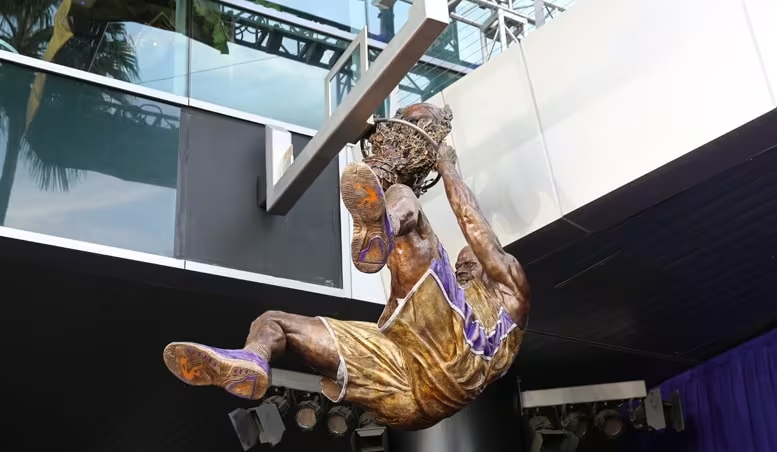
The tour continues with Kareem Abdul-Jabbar, whose statue reminds us that greatness can also be sustained over time. His skyhook, his longevity, and his statistical impact make him a bridge between very different generations of fans.
The foundations of the franchise
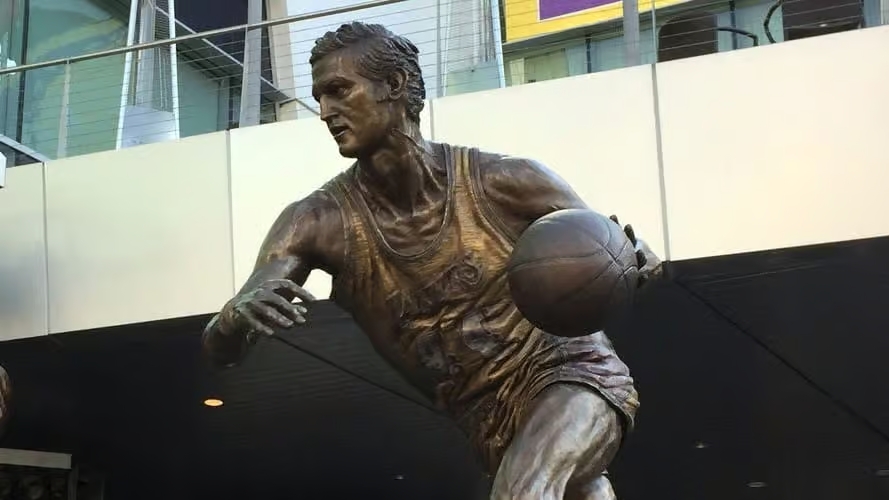
Not all of the Lakers' history can be explained by championships. Jerry West, immortalized in statue form since 2011, represents both the legendary player and the icon who ended up shaping the NBA logo. His figure connects the franchise with the modern origins of the league.
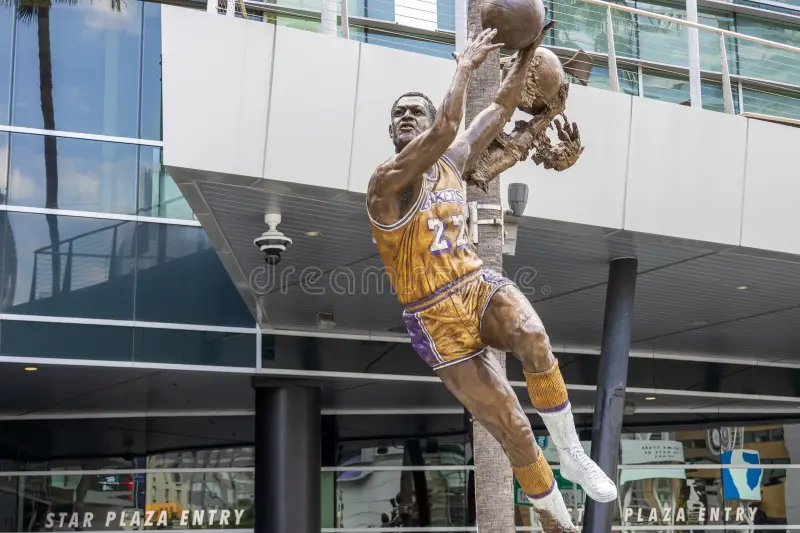
Next to him stands Elgin Baylor, whose statue recalls a period of individual brilliance during years of collective frustration. Baylor was great even when the titles weren't coming, and that nuance is also part of the Lakers' story.
The voice that told it all
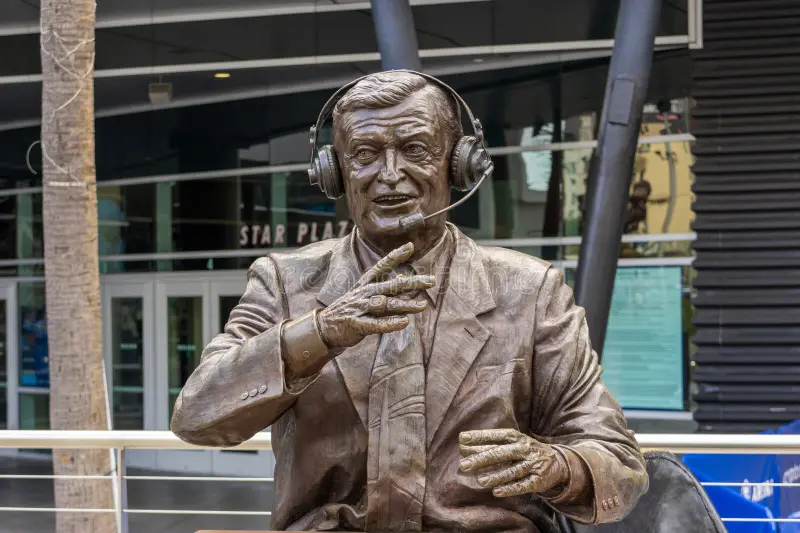
Amidst so much talent on the court, there is one name that never played a single minute and yet is indispensable: Chick Hearn. His statue does not celebrate baskets, but words. For more than four decades, he was the voice of the franchise, creating his own language for basketball and accompanying entire generations on radio and television. That he has his place alongside the stars says a lot about how legacy is understood in Los Angeles.
The memorial that defies sporting logic
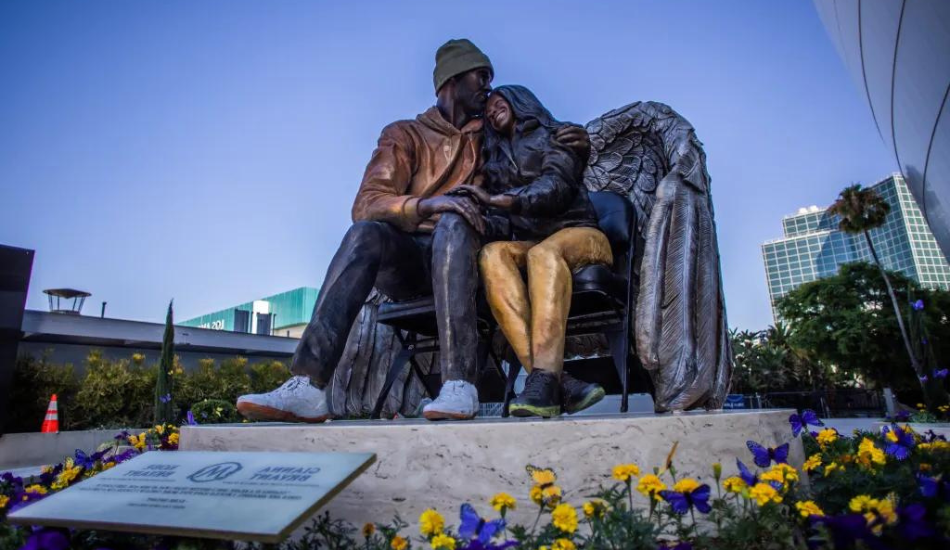
The latest addition is not based on statistics or titles. The memorial dedicated to Kobe and his daughter Gianna, installed in August 2024, shows them both sitting calmly, almost oblivious to the noise of the arena. It is an intimate image, designed more for contemplation than celebration. Its presence reminds us that, beyond the spectacle, sport is also about connection, family, and loss.
A space under constant construction
Today, there are thirteen statues surrounding Crypto.com Arena, but this is not a finished project. There are already plans for new additions, including another dedicated to Kobe Bryant wearing the number 24 jersey and a future statue of Pat Riley, a key figure both on the court and from the bench.
Because if anything defines this place, it is that it does not only look to the past. Star Plaza does not freeze the history of the Lakers: it organizes it, explains it, and leaves it ready to continue growing.


