


 Latest:

 sep 17 2026
Mid-September finds a group of European players uncertain where they'll play this season. They signed significant contracts with U.S. universities, but their eligibility is now in question. Some may return to Europe, and EuroLeague clubs are watching closely for that possibility.
What Has Changed
Until now, the NCAA examined European players with professional backgrounds on a case-by-case basis. Consideration was given to when they turned professional, what contract they signed, what compensation they received, what professional processes they participated in, and their academic history.
That flexible approach produced clear precedents last season. Dame Sarr, Ivan Kharchenkov, Elias Rapieque, James Nnaji, and Thijs De Ridder received clearance to compete in college basketball despite having played professionally in Europe. Many universities understood the path remained open.
During 2026, however, the NCAA began tightening its framework. And some conferences went further, approving their own rules—as the SEC did earlier this month: those who signed with an NBA or G League team, those who declared for the Draft without withdrawing on time, and those who were selected are ineligible.
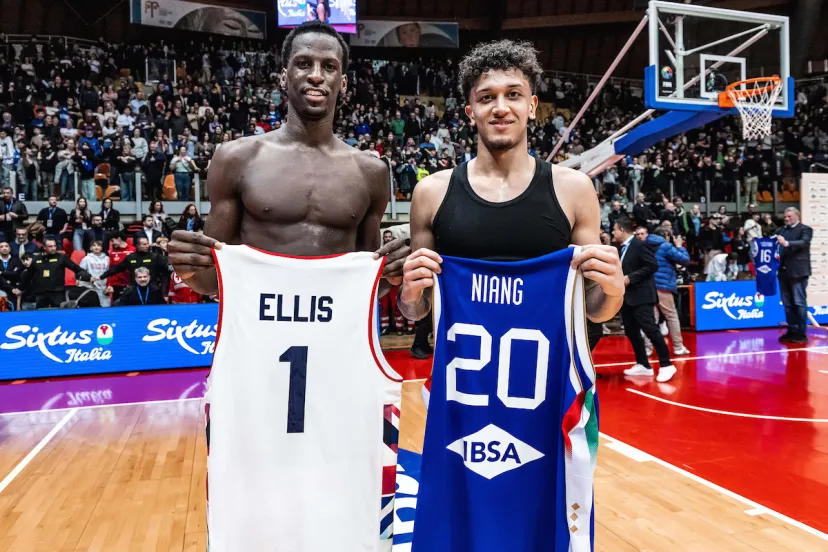
The Quinn Ellis Case
The British point guard accepted a significant financial offer from St. John's to play the 2026-27 season, with a defined plan: one year in the United States and then a return to Europe to join Olimpia Milano.
That agreement with the Italian club was already in motion. And now it could be accelerated: if Ellis doesn't receive clearance, Milan appears as an immediate alternative for this very season.
The Saliou Niang Case
This is the clearest example of the problem. The Senegalese small forward, developed in Italy, played professionally in Europe and was selected 58th overall in the 2025 Draft by the Cleveland Cavaliers. He never signed an NBA contract and continued his career on the continent. Later, he committed to LSU.
Under the SEC's interpretation, being selected in the Draft is enough to question his eligibility, even though he never played for or signed with a franchise. And he's not alone: other LSU internationals like Brice Dessert, Michael Ruzic, and Marcio Santos find themselves in the same situation.
Olimpia Milano also has him on its radar, though it's exploring other EuroLeague options. And there's a third path: play one season in the G League before making the jump to the NBA in 2027-28 with the Cavaliers, who retain his rights.
Why This Matters from Spain
Because one of those affected was playing in the ACB until two months ago. Michael Ruzic left Joventut this summer committed to LSU, and his situation is up in the air—so much so that Baskonia inquired about him last week in case he can't join the university.
And because the issue affects the model. The college route had become a real alternative for young European talent, with contracts that clubs on the continent can't match. If that door closes or becomes unpredictable, the calculation changes for any 19- or 20-year-old deciding their future.


