


 Latest:

 oct 01 2026
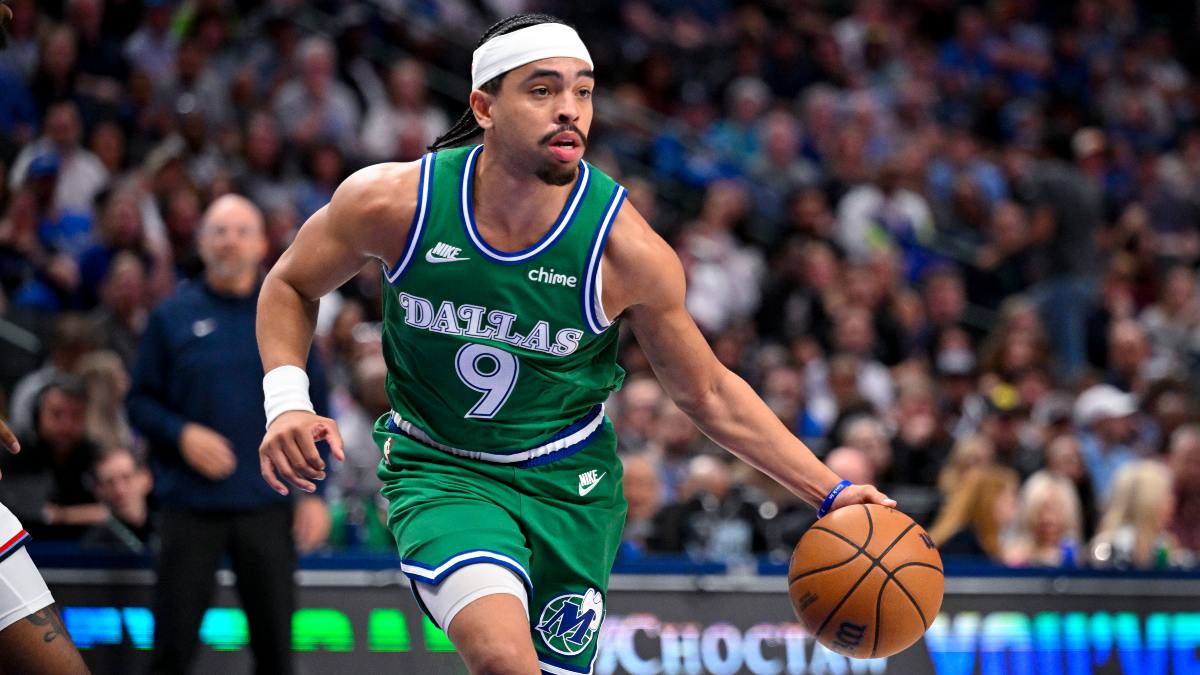
Ryan Nembhard is now a Denver Nuggets player. The Colorado franchise has completed the acquisition of the point guard on a two-way contract, according to Shams Charania, after weeks of being the most likely destination since Charlotte decided to cut him.
Denver was, in fact, the place that fit him best. Not because of the name, but because of the roster.
Two Point Guards and a Gap
The Nuggets' depth chart at the position was minimal until now: Jamal Murray as the undisputed starter and Tyus Jones as the only reliable backup option. Jones, moreover, comes off two disappointing seasons, so the second spot in the rotation is not locked down. For a player on a two-way contract, finding an open door with a team with championship aspirations is exactly the scenario you're looking for.
If Nembhard can surpass Jones in the minutes distribution, it wouldn't be surprising if he ends the season signing a standard contract.
What He Did in Dallas
His candidacy is supported by what he showed last season with the Mavericks: 6.6 points and 5.3 assists in 19 minutes per game, with his most impressive performance coming precisely against Denver, when he scored 28 points. Numbers of a short-rotation point guard, but with court vision and playmaking ability—exactly what's needed in a backup on a team built around Nikola Jokic.
The last name, by the way, is not new to the league: he is the brother of Andrew Nembhard, point guard for the Indiana Pacers.
Read also
- What Each NBA Contract Means: A Guide to Understanding the Market
- NBA 10-Day Contract Salaries Explained
- NBA Free Agents Available in 2026
What Is a Two-Way Contract
The two-way contract allows a player to split the season between the NBA team and the G League affiliate, in this case the Grand Rapids Gold. The limit is 50 regular season games with the NBA team; once that threshold is reached, the franchise must convert it to a standard contract or stop playing him. It also does not grant the right to play in the playoffs.
Each team can have up to three players with this type of contract, and it functions as a standard entry point for undrafted players and for those seeking a second chance after being cut.


